SPAIN
FREE-MASSONNERY IN spain
Along the Masonic Architecture and Heritage Route, Spain offers sites of great historical, documentary and symbolic value. From Barcelona to Salamanca and Málaga, these sites allow visitors to discover the influence of Freemasonry on Spanish culture, collective memory and community life. Archives, libraries and private collections offer visitors a multifaceted perspective on a heritage characterised by brotherhood, knowledge, persecution and the recovery of memory.
PLACES TO EXPLORE
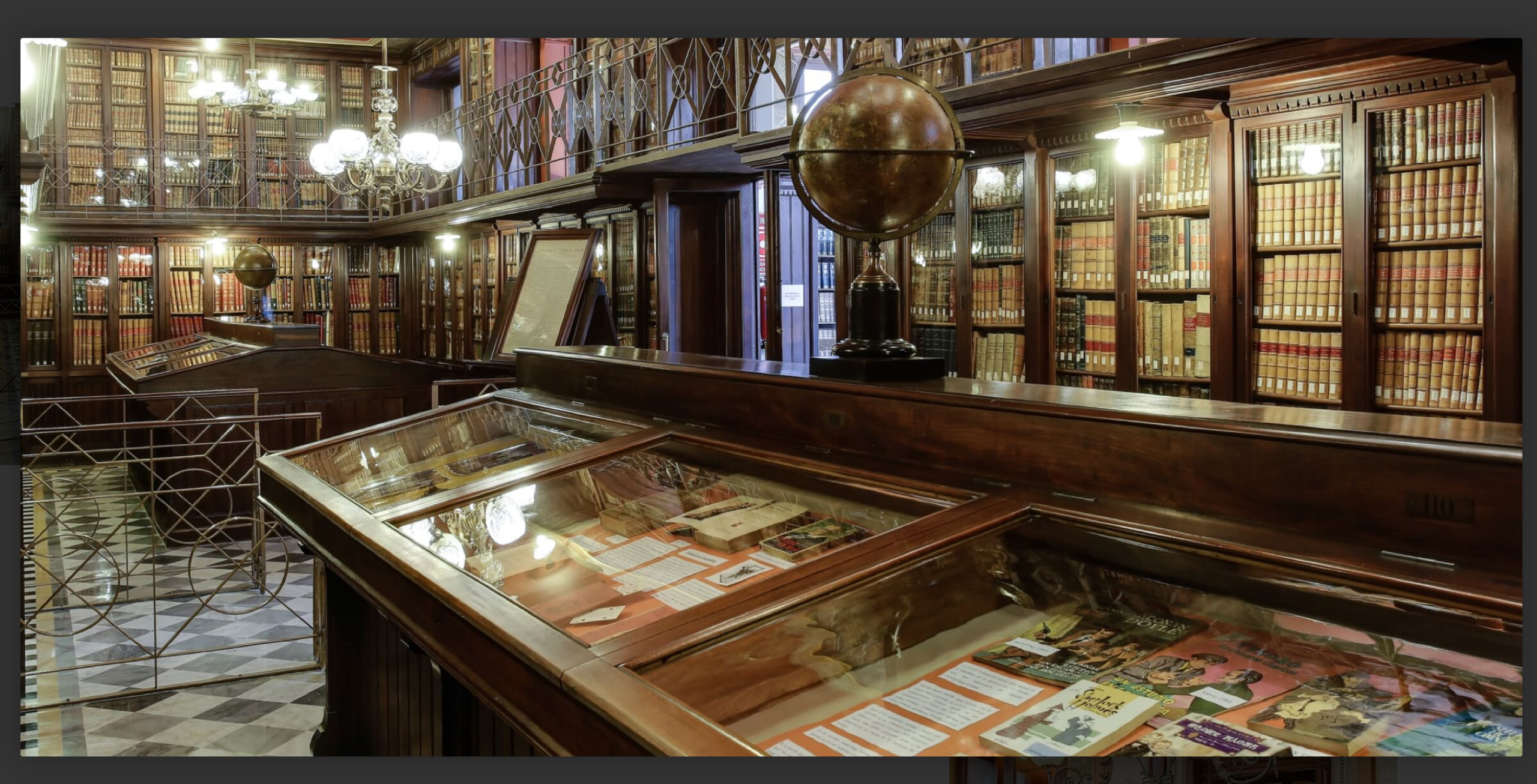
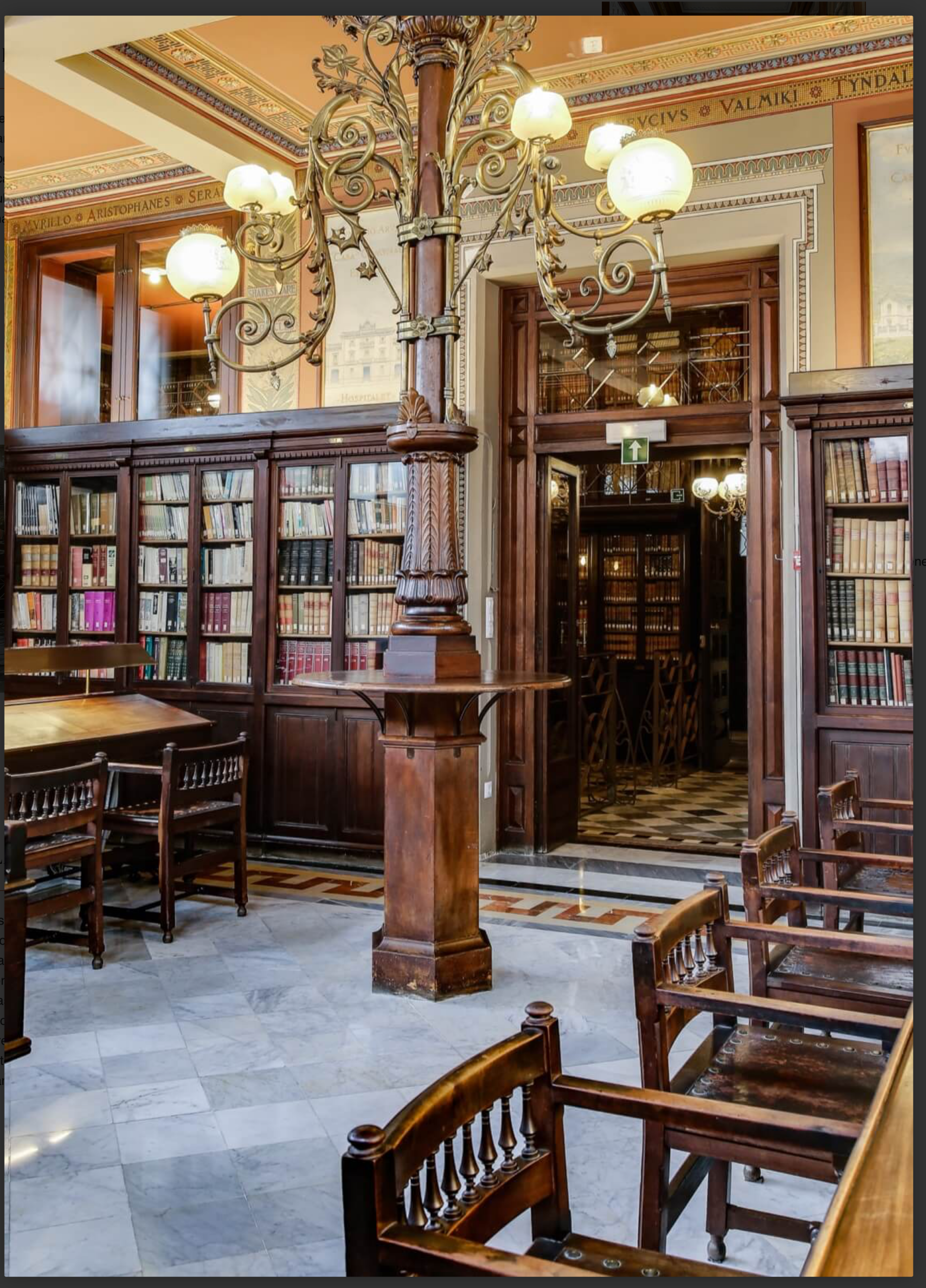
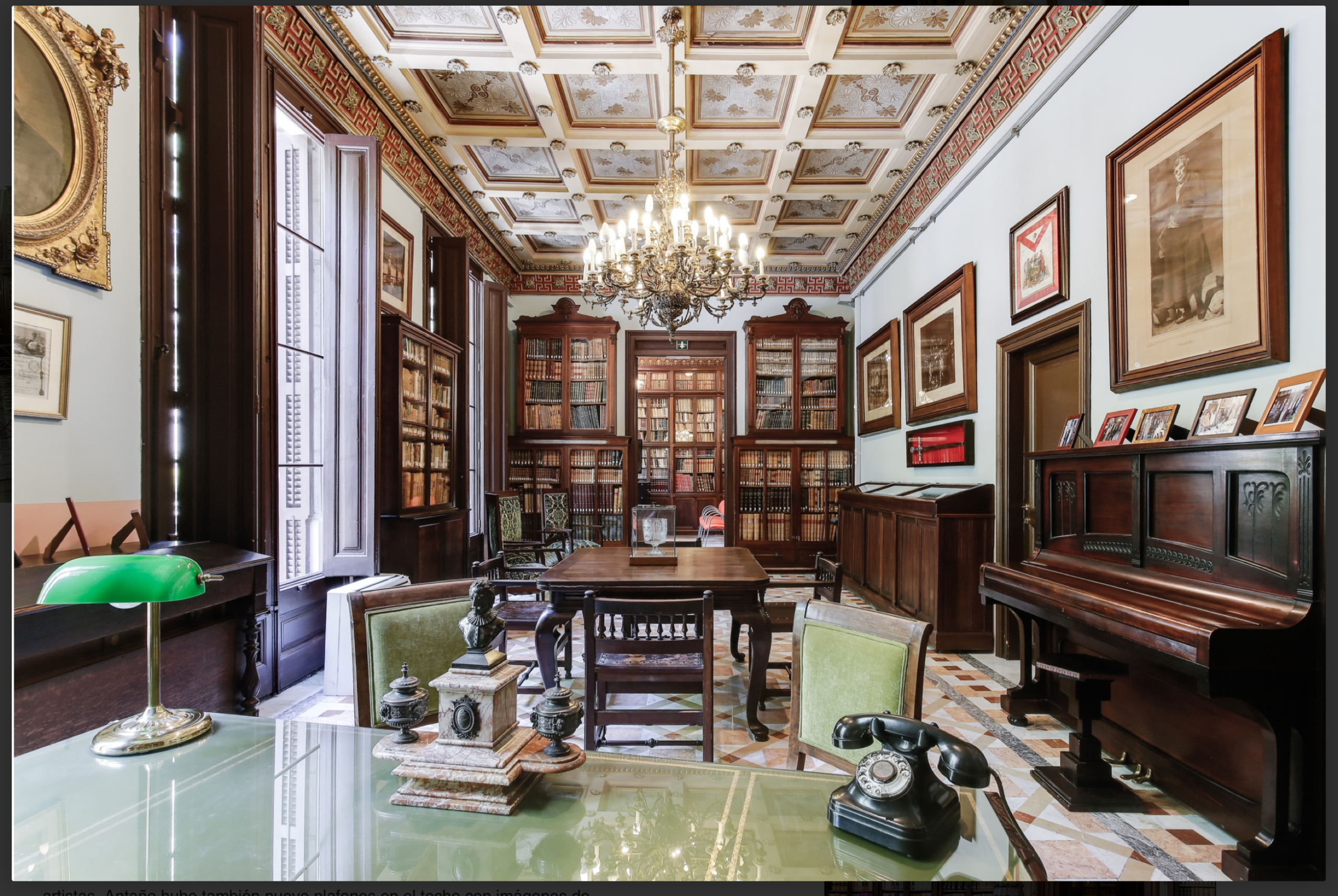
Today, the library remains very much alive. It organises exhibitions, activities, lectures, guided tours and projects to promote its heritage. Its historic rooms, its bibliographic collection and its symbolic significance make it an essential stop for anyone wishing to understand the presence of Freemasonry in the cultural history of Barcelona and Europe.
To visit the Arús Public Library is to discover a place where freedom is not merely an abstract concept, but a concrete experience: a home open to study, remembrance and human progress.
Barcelona
Arús Public Library
In the centre of Barcelona (Catalonia), on Passeig de Sant Joan, stands one of Europe’s most unique cultural spaces: the Arús Public Library. Founded in 1895 at the behest of Rossend Arús i Arderiu, it was conceived with an idea that was very progressive for its time: to make knowledge accessible to all citizens, regardless of social class, gender or age.
The Arús Library is not merely a historic library. It is also a tangible testament to a way of understanding culture as a path to emancipation. Its founder, Rossend Arús, was a writer, journalist, playwright, federal republican, freethinker, philanthropist and Freemason. His commitment to popular education and to the ideals of progress, freedom and fraternity became forever linked to this building, which he bequeathed to the people of Barcelona.
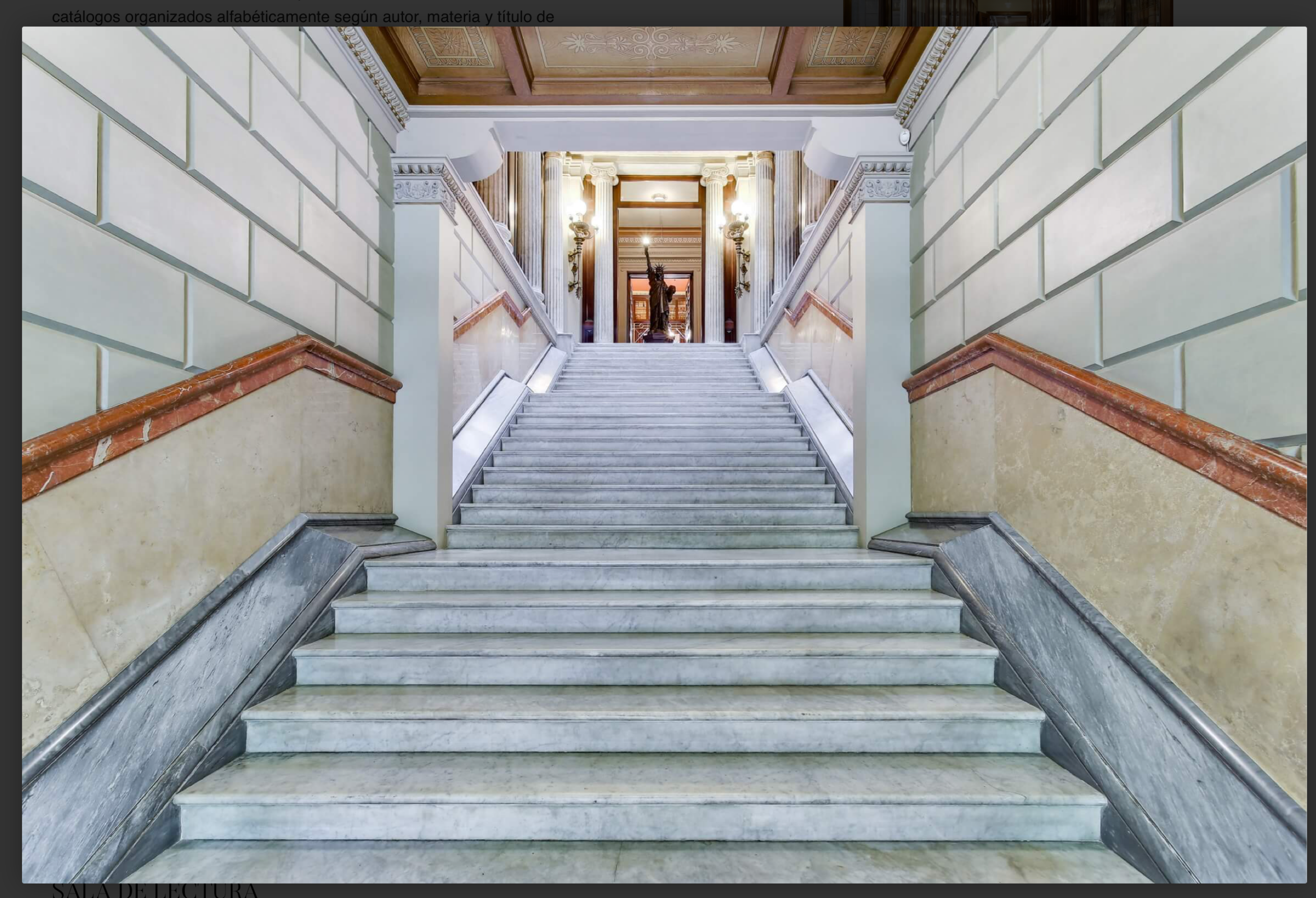
The tour begins with an image of great symbolic power. On the grand staircase, a reproduction of the Statue of Liberty welcomes visitors with the inscription ‘Alma Libertas’. Few images better encapsulate the spirit of the place: a library conceived as intellectual nourishment, as a secular space for culture and as an open door to free thought.
Its rooms retain the atmosphere of an institution founded in late 19th-century Barcelona, a city shaped by the associational movement, republicanism, the labour movement, popular Catalan nationalism and freethinking currents. The reading room retains its original layout from 1895 and allows one to imagine the ambition of its founders: to create a dignified, light-filled and open space, where knowledge was not the privilege of a select few.
The Arús Library has deep ties to Freemasonry. Rossend Arús joined Freemasonry during the Democratic Six-Year Period and went on to play a prominent role in Catalan Freemasonry. He was a founder of the Avant Lodge and eventually became Grand Master of the Catalan Regional Symbolic Grand Lodge. However, the Arús Library’s significance in Freemasonry is not limited to the biography of its founder. The institution houses one of the most significant bibliographic and documentary collections for the study of Freemasonry in Spain, alongside invaluable materials on social history, the labour movement, anarchism, republicanism and popular culture.
This is why the Arús Public Library fits so naturally into Route 33. It is not merely a matter of visiting a beautiful building or viewing a specialised collection. It is about entering a space where architecture, books, symbols and historical memory engage in dialogue with one another. The Arús shows how European Freemasonry was not merely a discreet social club, but also a cultural movement linked to education, critical thinking and the development of citizenship.
Malaga
Memories of an Old Freemason: A Love Story
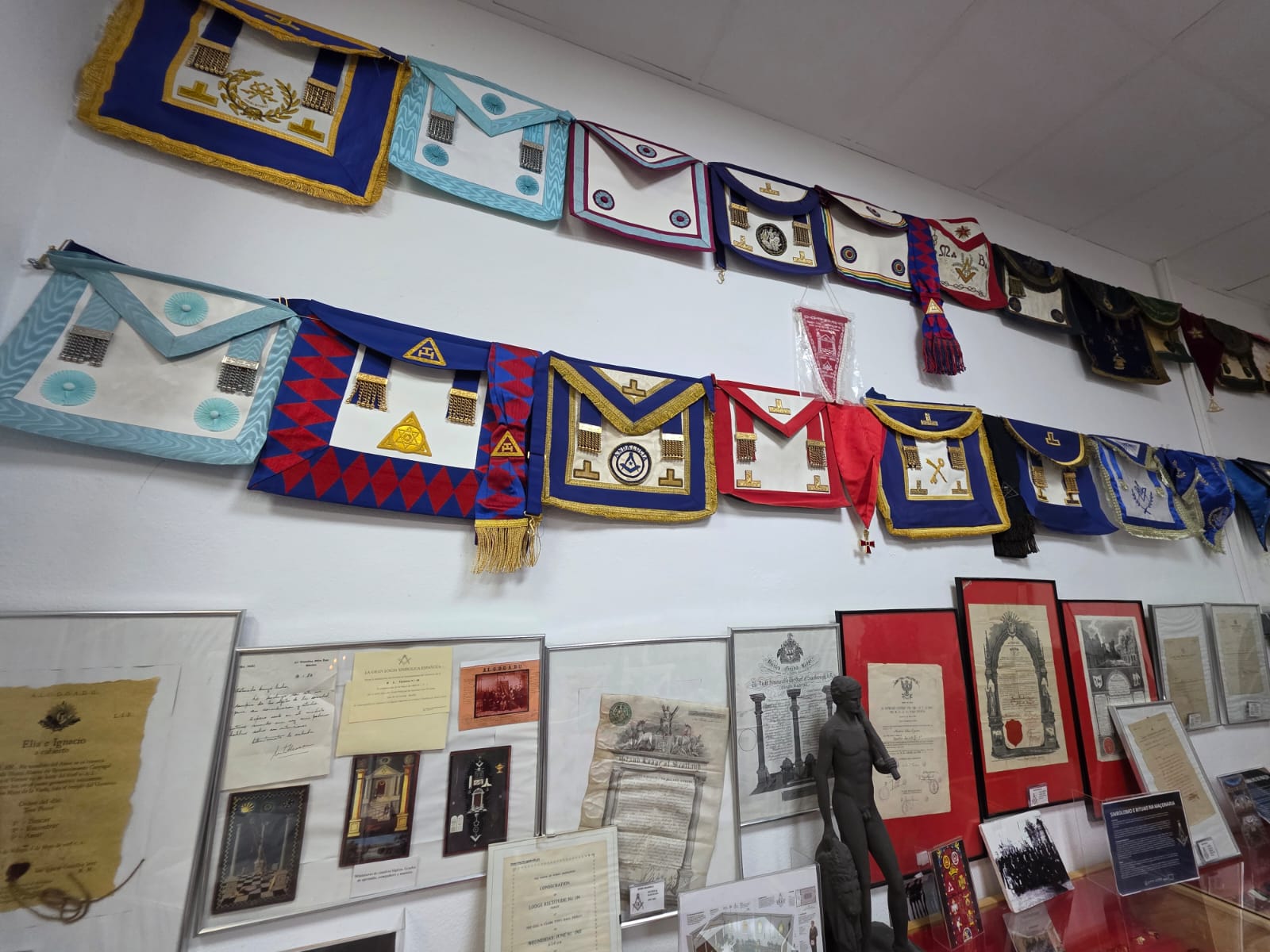
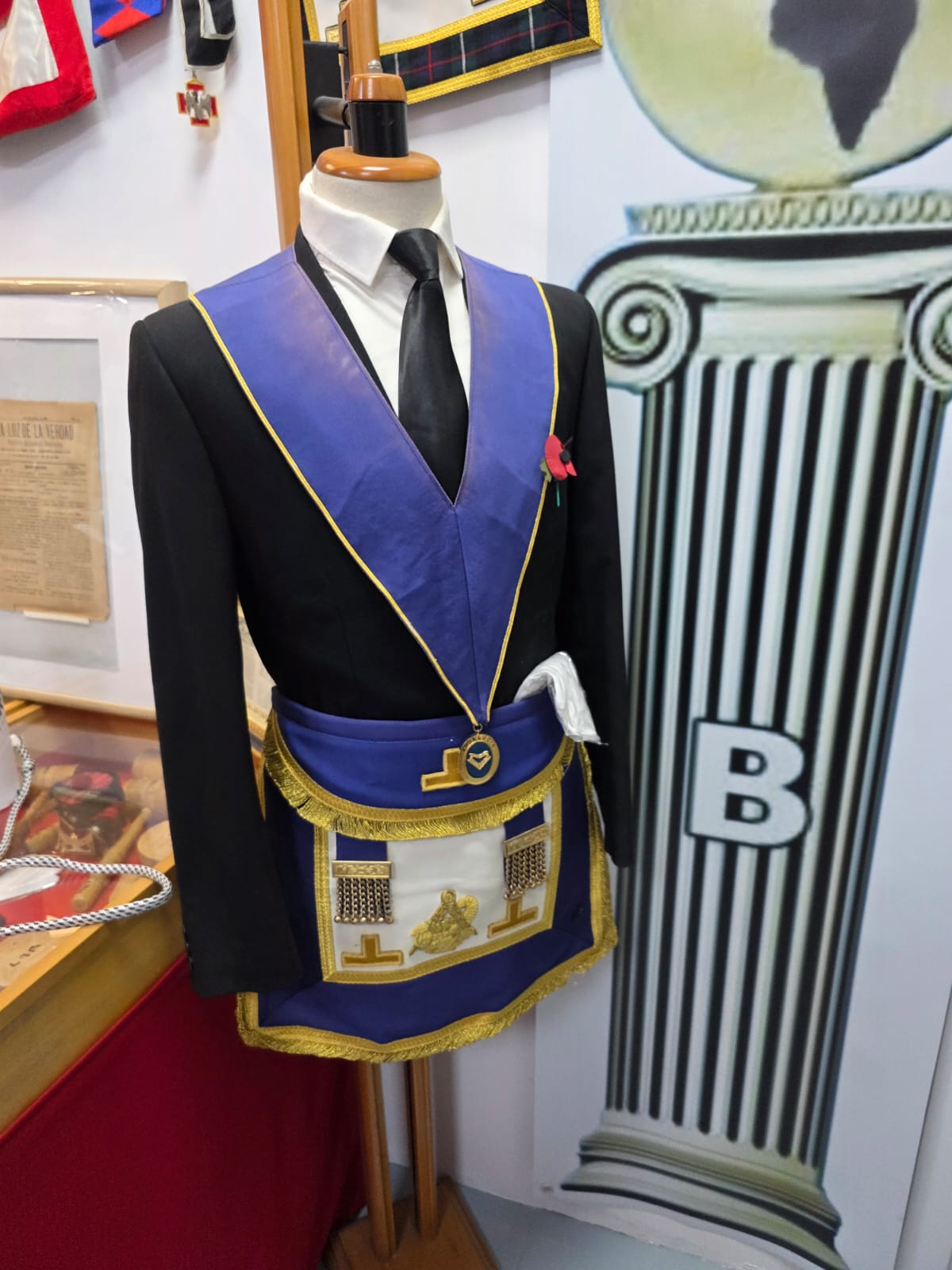
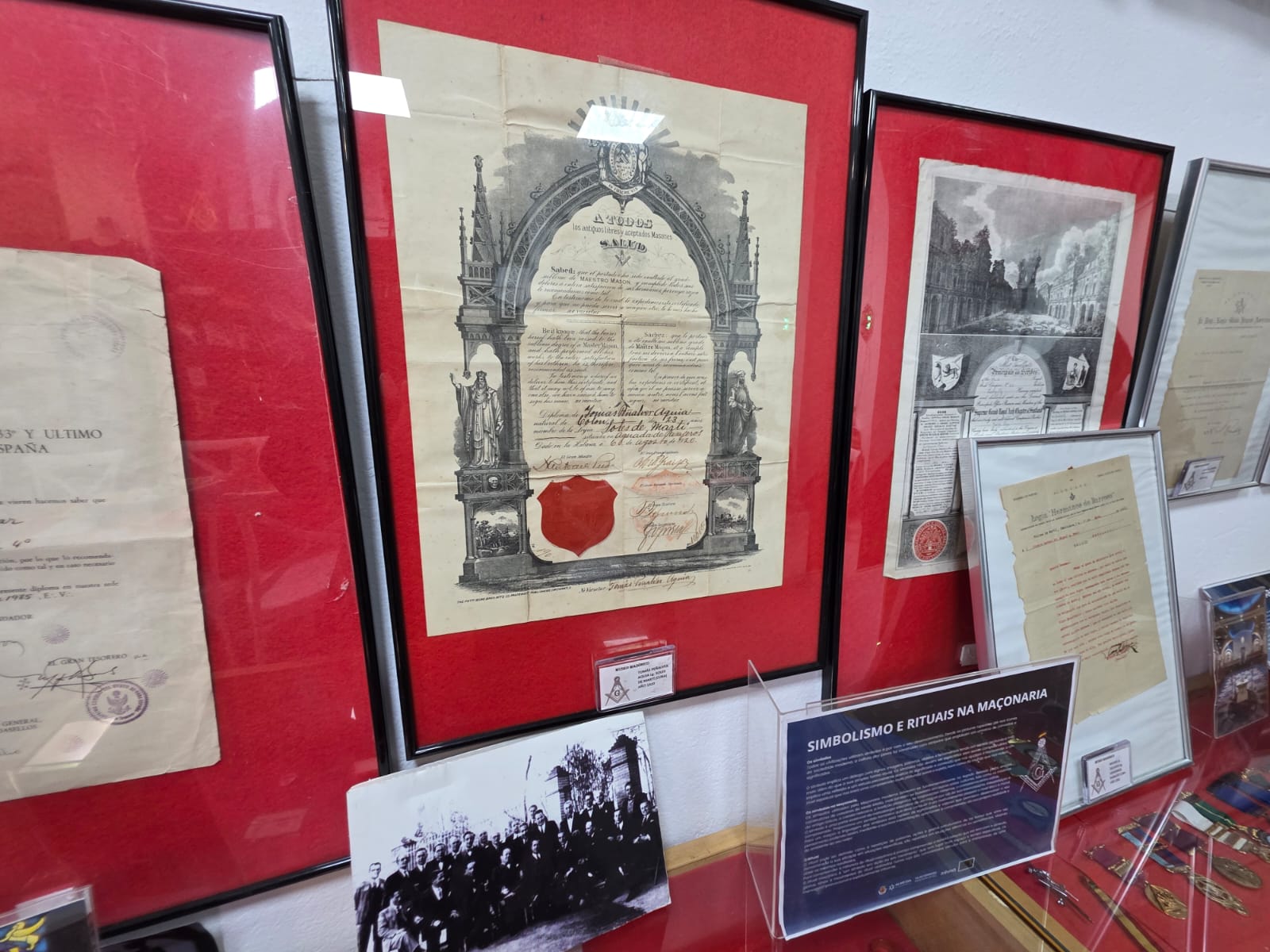
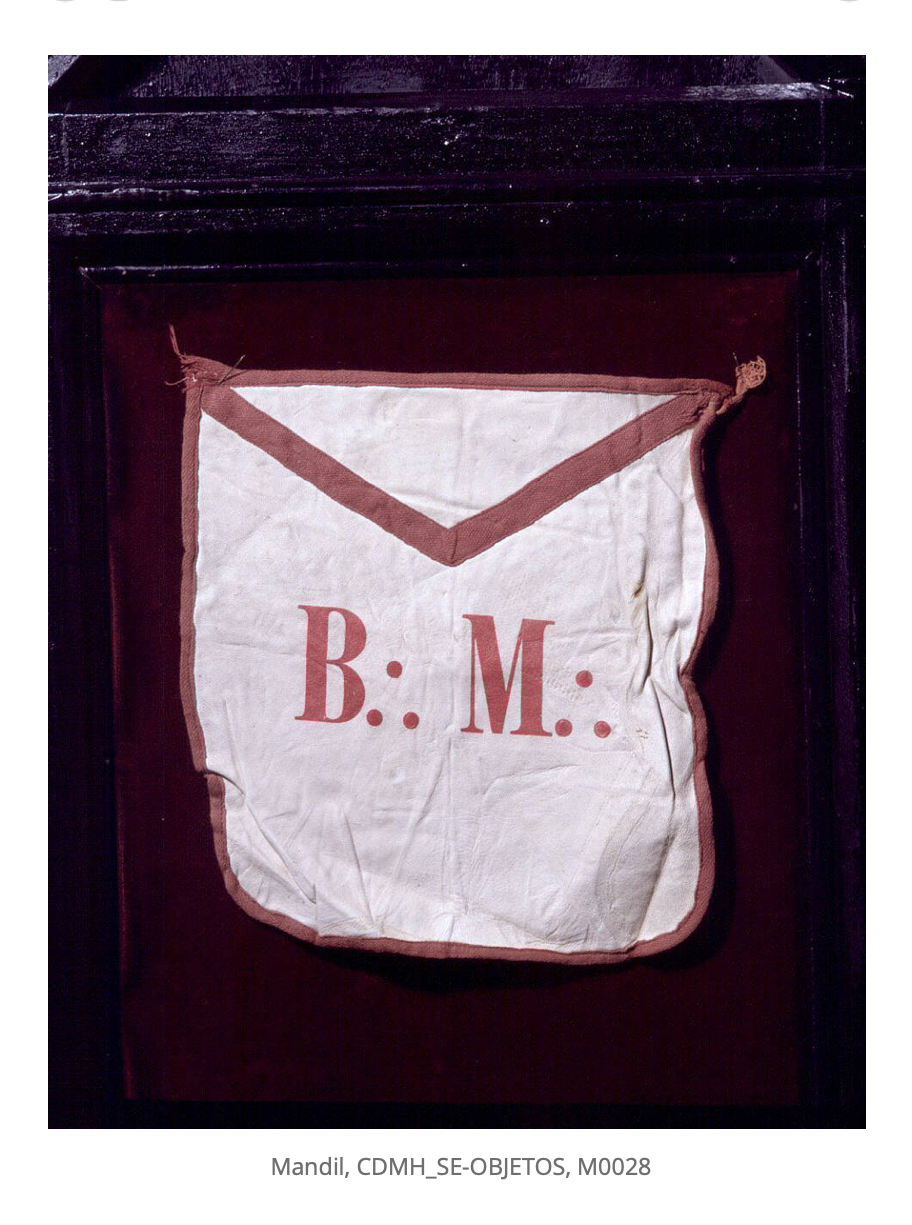
In Málaga, there is a Masonic collection that takes one’s breath away from the very first moment. It is not housed in a grand museum or a stately institution. It is displayed in a modest venue, yet the items gathered there possess extraordinary cultural significance: aprons, sashes, medals, jewellery, documents, books, photographs, symbolic tools and ritual objects that offer a glimpse into an essential part of the material culture of Freemasonry.
The collection was created by Andrés Cobos Azuar, a Freemason and passionate collector, under a title that today sounds almost like a farewell: Memories of an Old Freemason. For years he gathered pieces with patience, knowledge and affection. It does not seem the work of someone who accumulates objects out of mere curiosity, but rather of someone seeking to preserve a world of symbols, memories and brotherhood. There is talk of more than two hundred aprons, a figure which in itself gives an idea of the breadth of the collection and the variety of origins, styles, degrees, periods and sensibilities it may contain.
But the most moving aspect of this space in Málaga is not merely the number of items. It is the way in which they are preserved. Following the death of its creator, the collection remains alive thanks to his family, who present it not as a cold inventory, but as an emotional legacy. Each object points to a wider history, but also to a specific biography: that of someone who deeply loved Freemasonry and sought to make it understandable, visible and accessible.
That is why this place should not be seen merely as a museum. It is, above all, a love story. A love of memory, of brotherhood, of symbolism and of the life of the man who devoted so many years to gathering these artefacts. In its display cases, Freemasonry ceases to be an abstraction. It becomes matter, texture, colour, gesture and memory. An embroidered apron, a square, a compass, a medal or an old publication speak of ideals such as freedom of conscience, tolerance, moral improvement and the search for truth.
The contrast between the simplicity of the venue and the richness of its contents lends the visit a special intensity. You are not entering a monumental space, but a carefully preserved legacy. And perhaps that is why the experience feels more direct, more human. The collection does not create a sense of distance: it invites you to look closely.
As part of a Masonic heritage trail, this small space in Málaga makes an essential contribution. It reminds us that heritage does not always stem from large institutions. Sometimes it springs from a personal passion, from a life devoted to gathering scattered fragments, and from a family that decides not to let oblivion close the door. ‘Memories of an Old Freemason’ is, in that sense, an impressive collection, but also a form of loyalty: to a person, to a memory and to a tradition.
Salamanca
The Historical Memory and Freemasonry Documentation Centre
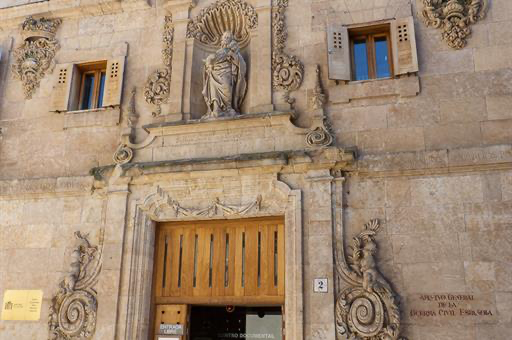
The Salamanca Centre for Historical Memory (CDMH) occupies a unique place within Europe’s Masonic heritage. It is neither a historic lodge preserved as such, nor a museum established on the initiative of Freemasonry itself. Its significance stems, precisely, from a paradox: a large part of the collections that today enable us to study Spanish Freemasonry were assembled by a state apparatus created to persecute it.
The origins of the current CDMH lie in the documentary services organised by the Franco regime during the Civil War and subsequently consolidated under the dictatorship. Those bodies seized archives, libraries, artefacts and documentation from political parties, trade unions, associations, republican institutions and Masonic lodges. Their aim was not to preserve heritage, but to classify information, compile dossiers and fuel the repressive mechanisms of the new regime. Among the ideological enemies singled out by the Franco regime, Freemasonry occupied a particularly prominent place, having been turned by official propaganda into one of the great symbols of so-called ‘anti-Spain’.
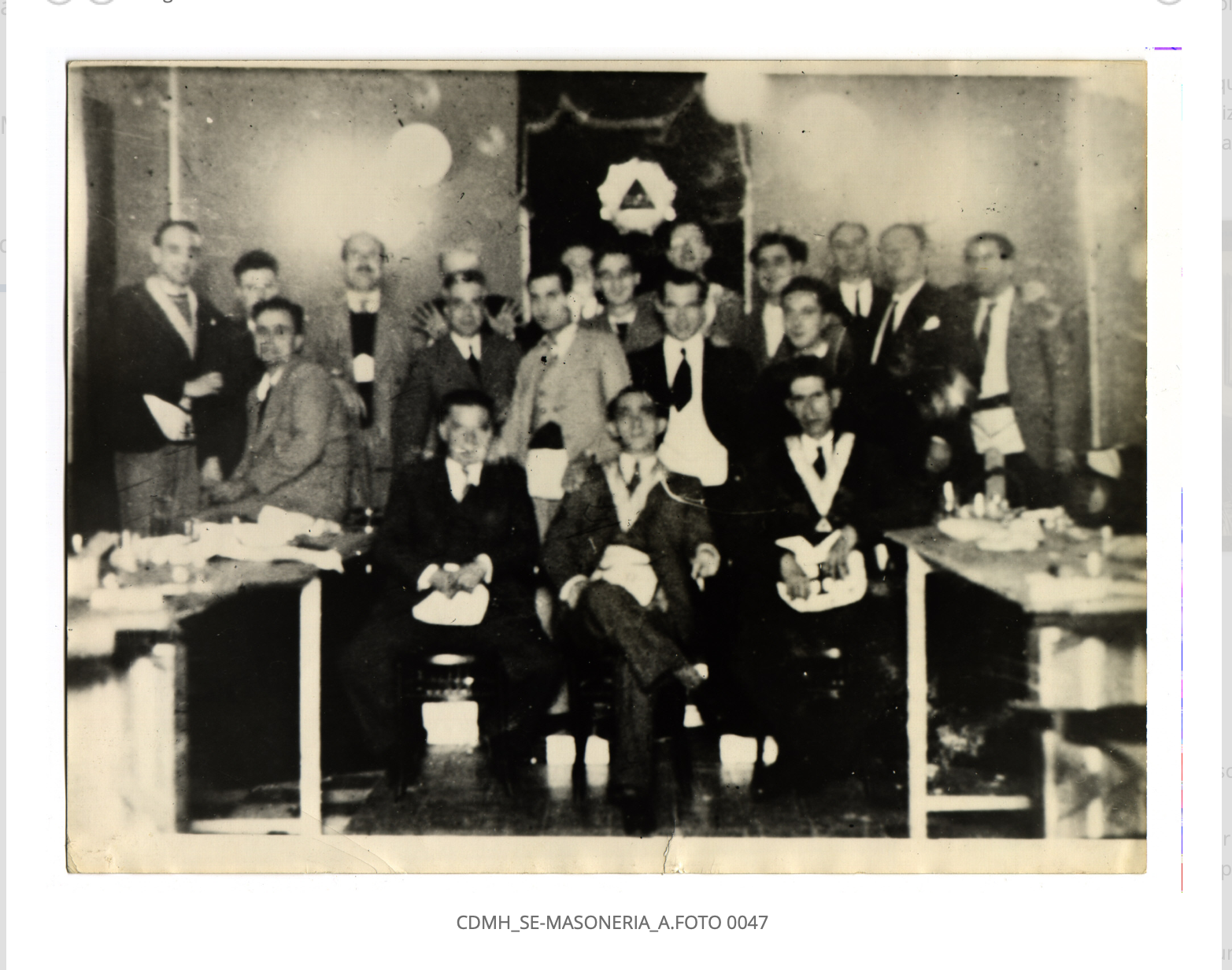
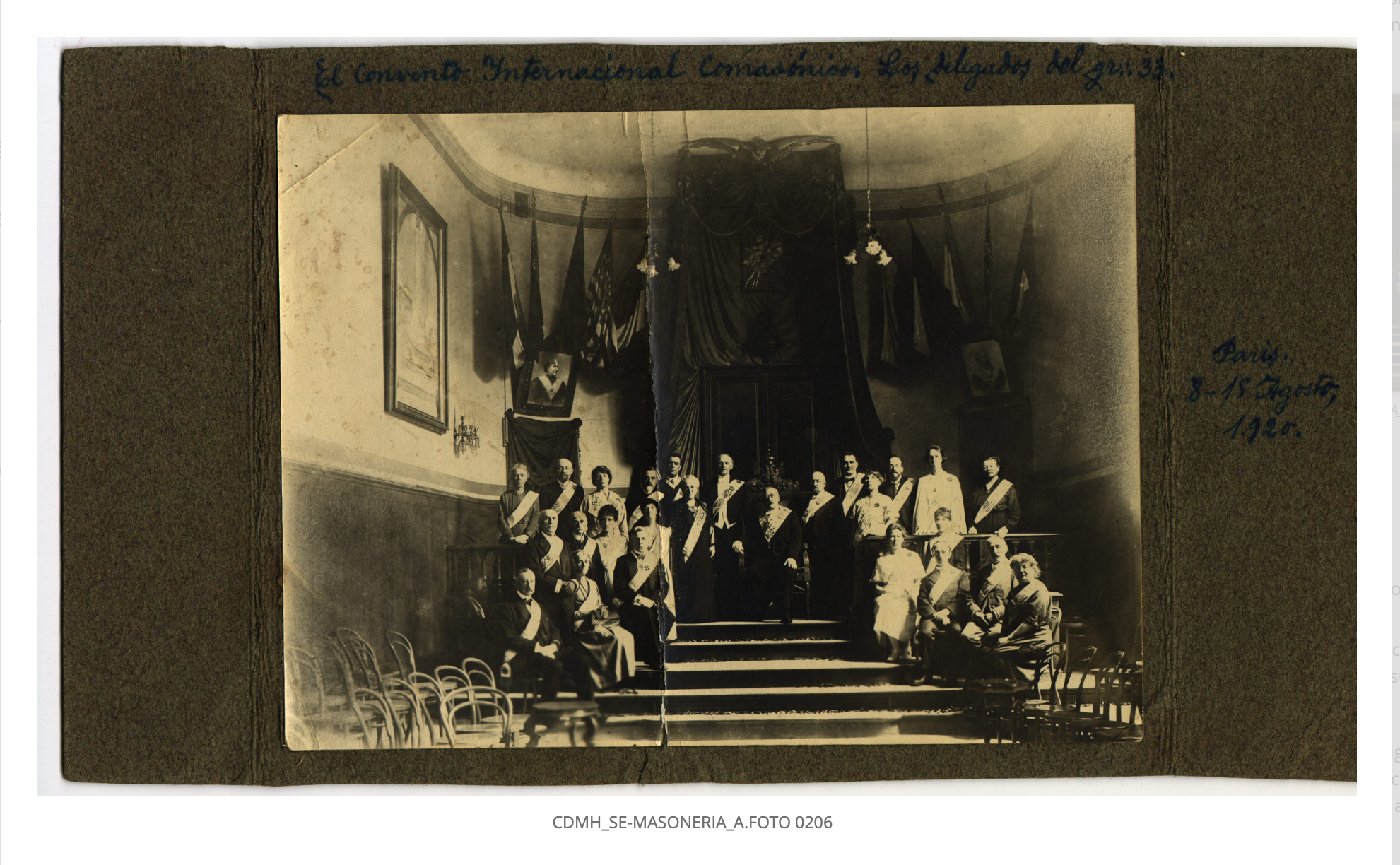
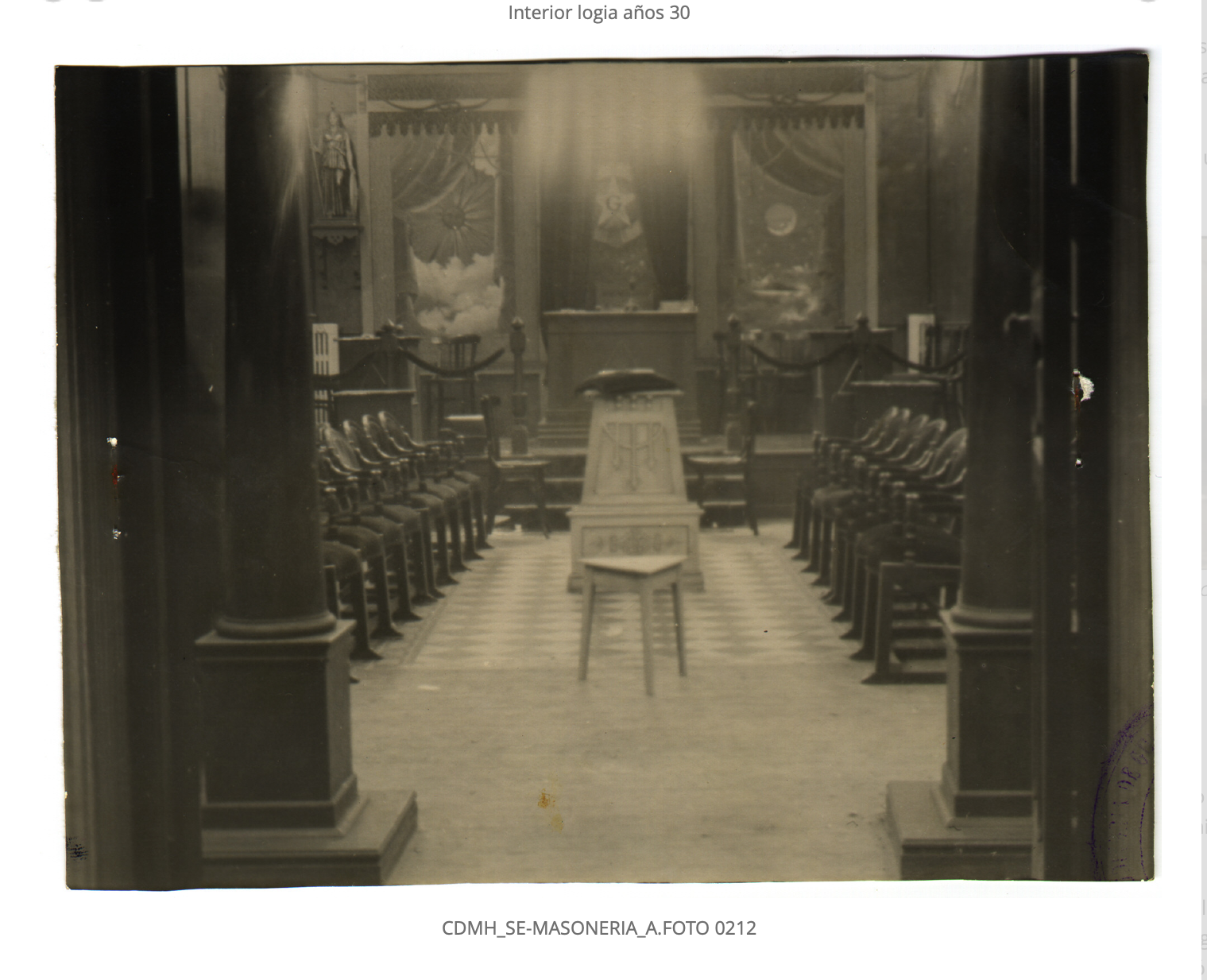
For this reason, a visit to the CDMH compels us to view Freemasonry from a dual perspective. On the one hand, the centre holds an exceptional collection of documentation on lodges, Freemasons, publications, files, correspondence, ritual objects and Masonic material culture. On the other hand, these very documents reveal how the persecution operated: the identification of individuals, the compilation of files, the fabrication of charges and the use of Masonic membership as political and criminal evidence. The archive speaks, at the same time, of Masonic life and of the machinery that sought to destroy it.
One of the CDMH’s best-known spaces is its permanent exhibition dedicated to Freemasonry, located at its headquarters on Calle Gibraltar. It displays Masonic documents and artefacts drawn from the centre’s collections. This exhibition has great educational value: it enables visitors to gain an insight into the symbolic language of Freemasonry and to understand the gap between the historical reality of the institution and the conspiratorial caricature spread by the Franco regime.
The European dimension of this site is also evident in the international connections of the repression. Franco’s campaign against Freemasonry was not an isolated phenomenon. It formed part of a political climate marked by European fascist movements and, at certain times, involved collaboration and the exchange of information with Nazi Germany. The documents seized from Spanish Freemasons in exile, the lists, the reports and police cooperation show that anti-Masonic persecution formed part of a transnational culture of repression, fuelled by anti-communism, anti-Semitism and the myth of the Judeo-Masonic conspiracy.
As part of Route 33, the CDMH in Salamanca therefore offers a heritage experience of immense historical significance. Here, Masonic heritage appears not only as architecture, ritual or symbolism, but also as confiscated memory. What began as an instrument of surveillance and punishment has, in a democracy, become a space for research, education and redress. This transformation is essential: it restores documentary dignity to those who were persecuted and offers visitors a critical perspective on the political uses of the archive.
To visit the CDMH is to understand that the memory of Spanish Freemasonry is not preserved solely in temples, libraries or documents produced by the institution itself. It is also preserved in the dictatorship’s records, in the files on repression and in the objects seized from the lodges. Salamanca reminds us that studying this heritage is a form of historical knowledge, but also an act of democratic responsibility.
Cartographie
France
Sur les chemins de la Route d’Architecture et de Patrimoine Maçonniques, il existe des sites exceptionnels à découvrir au Sud, sur l’Atlantique ouest jusqu’à la capitale. Ces sites sont de véritables découvertes à ne pas manquer.
Andorre
Autriche
Belgique
Bulgarie
Canaries
Le 20 février 1923, le Conseil suprême du 33e degré pour l'Espagne et ses dépendances a émis une communication à la Loge Añaza 270 dans laquelle il décidait d'autoriser la constitution d'une Grande Loge régionale des îles Canaries qui parrainerait les Loges établies là-bas « compte tenu des raisons existantes pour cela».
La transition vers la démocratie a rétabli la légalité de la franc-maçonnerie espagnole. Depuis le début des années 1980, la Franc-Maçonnerie canarienne s'est concentrée à Gran Canaria, Tenerife et Lanzarote, se rattachant initialement à la Grande Loge d'Espagne et à son Conseil Suprême du 33ème Degré, non sans une certaine réticence anglaise due à la philosophie du Rite d'Émulation. Mais les sentiments maçonniques des francs-maçons canariens, liés à leur tradition historique, s’éloignent du concept de « fraternité » anglo-saxonne ; et pas seulement dans le rituel, mais dans la manière de penser.
Croatie
Espagne
Sur les chemins de la Route de l’architecture et du patrimoine maçonniques, l’Espagne offre des lieux d’une grande valeur historique, documentaire et symbolique. De Barcelone à Salamanque et Malaga, ces lieux permettent de découvrir l’empreinte de la franc-maçonnerie dans la culture, la mémoire et la vie associative espagnoles. Archives, bibliothèques et collections privées offrent au visiteur un regard pluriel sur un patrimoine marqué par fraternité, savoir, persécution et récupération de la mémoire.
Macédoine du Nord
Pologne
Ensuite à Tarnowskie Gory qui est inscrite par l'Unesco et dont le patrimoine culturel, grâce à la mairie qui a récupéré les objets de deux Loges maçonniques détruites par le régime nazi pour en faire un musée. Dans cette région riche en mines d’argent, la franc-maçonnerie était très développée. Dans la même ville, un magnifique château reconstruit abrite un musée maçonnique et un temple avec les mobiliers maçonniques où la loge de Grande Loge de France a pu se réunir pour ses travaux. On peut passer quelques jours sur place, car il y a un hôtel et un restaurant.
Portugal
Notre Institution, caractérisée par son engagement envers la Franc-Maçonnerie Régulière et Traditionnelle, joue un rôle significatif dans la préservation et la promotion des principes Maçonniques.